
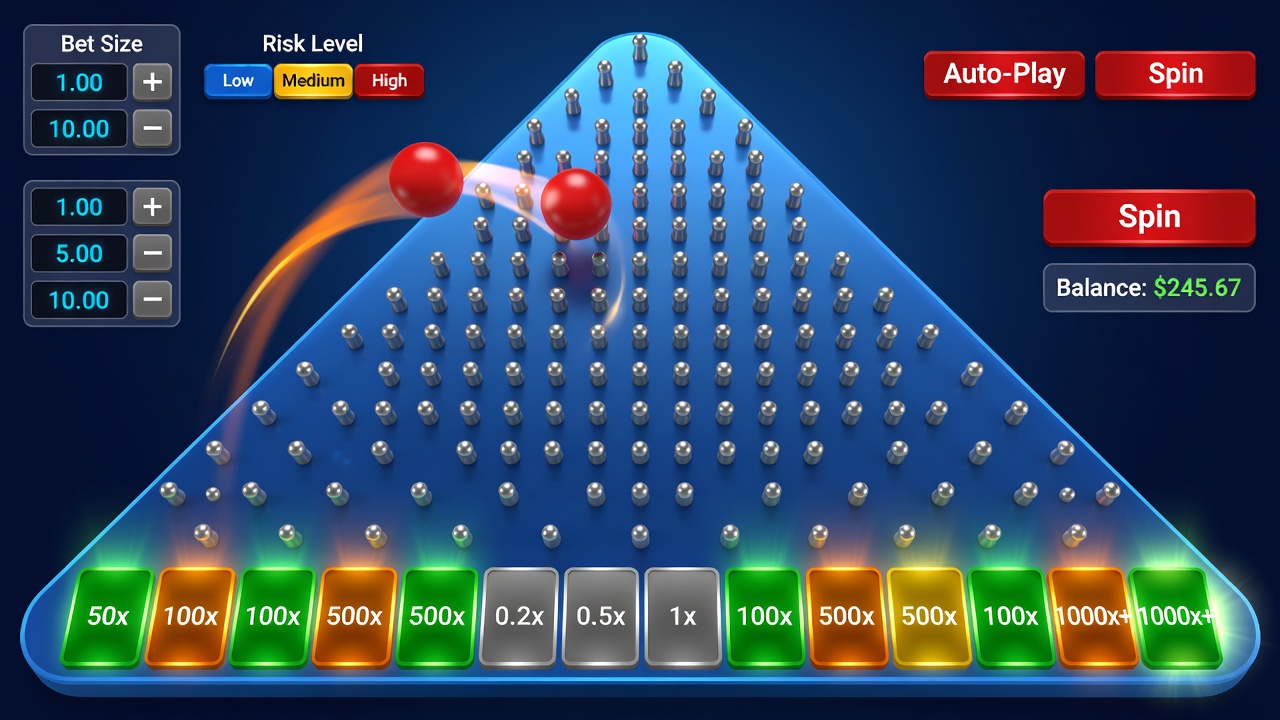
A colored ball drops. It bounces off a peg, then another, then a third, and by the time it settles into a slot at the bottom, the outcome has already been decided by a chain of small, unpredictable collisions. That single moment of physical chaos is the entire appeal of Crazy Balls, and it explains why so many players get hooked after just one round instead of walking away after a quick look.
What separates this title from a typical spinning-reel slot is the visible mechanism. Nothing is hidden behind a curtain of symbols - you watch the ball fall, you watch it react, and you understand exactly why it landed where it did. Before placing a single wager, it helps to see the mechanics in motion, and a short session on how to play crazy balls at the official page gives a clear picture of the drop pattern, the multiplier zones, and the pace of a typical round. That preview alone answers most of the questions new players have about timing and risk.
This guide walks through the full picture: how the game is structured, what the rules actually mean in practice, and which strategic habits separate players who manage their bankroll well from those who burn through it in ten minutes. By the end, you should be able to sit down at any Crazy Balls online game and play with a clear head rather than guesswork.
What Is Crazy Balls and Why It Stands Out
Crazy Balls belongs to a category of casual casino games often called drop games or plinko-style games. The concept is simple to describe but genuinely engaging to watch: a ball is released from the top of a pegged board, bounces unpredictably as it falls, and lands in one of several slots at the bottom, each tied to a different payout multiplier. Unlike slot machines, there are no spinning reels or paylines to interpret. The entire result is visual and immediate.
Origins of the Drop-Ball Format
The drop-ball format traces its roots to mechanical pachinko-style arcade machines, later adapted into digital casino products because the physics-based randomness translates well to screen animation. Crazy Balls takes that foundation and layers in adjustable risk settings and multiple board configurations, giving it more depth than the arcade version it descends from.
How It Differs From Traditional Slots
Traditional slots rely on fixed reel combinations and paytables that can feel abstract to newer players. Crazy Balls gameplay, by contrast, is transparent - you see cause and effect in real time. There's no symbol matching to memorize, no bonus round trigger to decode. The board itself is the entire game.
Why Players Keep Coming Back
The short round length is a major draw. A single drop takes just a few seconds, which means players can run through many rounds quickly, adjust their bet size on the fly, and stay engaged without the downtime that some other casino formats involve.
Core Gameplay Mechanics Explained
Understanding the mechanics is the fastest route to playing with confidence. The board, the ball behavior, and the payout structure work together as one connected system, and once you grasp how they interact, the randomness stops feeling arbitrary and starts feeling readable.
The Drop Board and Peg Layout
The board consists of rows of pegs arranged in a triangular or diamond pattern. As the ball falls, it strikes pegs and deflects left or right at each row, following simple physical randomness rather than a scripted path. More rows generally mean more possible landing outcomes and a wider spread between low and high payouts.
Multiplier Slots and Payout Zones
At the base of the board sit numbered slots, each carrying its own multiplier. Center slots typically offer lower, safer multipliers because statistically more balls land near the middle. Outer slots carry higher multipliers precisely because they're harder to reach - the ball needs a long run of deflections in the same direction to land there.
Bet Placement and Round Timing
Before each drop, you set your wager amount and, depending on the version, choose a risk level that reshapes the multiplier distribution. Once the ball is released, the round runs its course automatically. There's no mid-round decision-making, which keeps the pace brisk and the rules easy to internalize.
Step-by-Step: How to Play Crazy Balls Game
Getting started takes only a few minutes, but a methodical first session prevents the confusion that leads to careless betting later. Here is the practical sequence most versions of the game follow.
Setting Up Your Account and Balance
Register or log into the platform hosting the Crazy Balls online game, then fund your account balance. Most platforms allow you to set a display currency and view your balance directly above the board, which makes bet sizing straightforward.
Choosing Bet Size and Risk Level
Select your stake per round first. Then, if the version you're playing offers adjustable risk, decide whether you want a low-risk setup with modest, frequent payouts or a high-risk setup with rarer but larger multipliers. This choice shapes the entire session, so it deserves real thought rather than a default click.
Dropping the Ball and Reading the Outcome
Press the drop button. Watch the ball's path - it's not just entertainment, it's useful feedback on how the current board configuration behaves. The moment it lands, the payout is calculated instantly and added to or deducted from your balance.
Repeating Rounds or Using Auto-Play
Most versions include an auto-play feature that runs a set number of rounds at a fixed bet size without manual input. This is convenient for testing a risk level over a larger sample, but it should always be capped with a loss limit to avoid unintended overspending.
Understanding Crazy Balls Rules in Detail
The rules of Crazy Balls are minimal compared to card games or table games, but the details that do exist directly affect your outcomes and are worth reading carefully rather than skimming.
Minimum and Maximum Bet Limits
Every platform sets a floor and ceiling for wagers. The minimum is usually low enough for casual play, while the maximum protects both the platform and the player from extreme swings in a single round. Checking these limits before you start prevents mid-session surprises.
Return-to-Player Percentage and Volatility
Like most randomized casino games, Crazy Balls operates on a built-in return-to-player rate, meaning that over a large number of rounds, a certain percentage of total wagers is returned to players as winnings. Volatility describes how that return is distributed - low volatility pays out smaller amounts more often, high volatility pays out rarely but with larger multipliers when it does.
Fairness Mechanisms and Random Outcomes
Reputable versions of the game use certified random number generators to determine each ball's path, ensuring no two drops are influenced by previous results. This is worth understanding because it directly debunks the idea of "hot" or "cold" boards - each round is statistically independent.
- Bet limits vary by platform and currency
- RTP is fixed by the game provider and disclosed in the rules section
- Volatility settings change the multiplier spread, not the underlying fairness
- Random number generation makes previous outcomes irrelevant to future ones
Building a Smart Crazy Balls Strategy
No strategy can override the randomness built into the drop mechanic, but disciplined habits meaningfully change how long your bankroll lasts and how enjoyable the session feels. Strategy here is about bankroll control and risk calibration, not about predicting where the ball will land.
Bankroll Management Basics
Decide on a total session budget before you start and break it into smaller units - for example, risking no more than two to three percent of your bankroll per round. This approach stretches your playing time and reduces the odds of an early wipeout from a short losing streak.
Adjusting Risk Level Based on Session Goals
If your goal is extended, steady play, lower risk settings with frequent small payouts suit you better. If you're chasing a larger single win and can tolerate longer dry spells, higher risk levels make more sense. Matching the setting to your actual goal, rather than switching impulsively mid-session, is the single most effective habit serious players develop.
Knowing When to Stop
Set both a win target and a loss limit before you begin, and honor both. Momentum feels persuasive in the moment - a hot streak invites bigger bets, a cold streak invites chasing losses - but predetermined limits remove emotion from a decision that's better made with a clear head.
Common Mistakes New Players Make
Most losses that feel unfair on reflection actually trace back to a handful of avoidable habits rather than bad luck alone.
Ignoring the Risk Settings
Many new players leave the risk level on default without understanding how dramatically it reshapes the payout curve. A high-risk setting with a small bankroll is a fast way to run out of funds before you've had time to learn the board's behavior.
Chasing Losses With Bigger Bets
Doubling a bet after a loss to "catch up" is one of the oldest and least effective habits in randomized games. Because each drop is independent, a bigger bet doesn't improve your odds - it simply increases your exposure at the exact moment your bankroll is already thinner.
Overusing Auto-Play Without Limits
Auto-play is convenient, but running it unattended for long stretches without a stop-loss setting can drain a balance faster than manual play, simply because there's no natural pause for reflection between rounds.
Frequently Asked Questions
Is Crazy Balls based on skill or luck?
It's almost entirely luck-based. The ball's path is governed by physics-driven randomness, and no amount of timing or clicking technique changes where it lands. Strategy in this game applies to bankroll and risk management, not to influencing individual outcomes.
What's the difference between low and high risk settings?
Low risk spreads payouts more evenly across the board, so you win smaller amounts more often. High risk concentrates most of the value in the outer slots, meaning you'll lose more rounds but occasionally land a much larger multiplier.
Can I play Crazy Balls for free before betting real money?
Most platforms offer a demo mode with virtual credits, which is a practical way to learn the board layout and multiplier distribution without financial risk before switching to real-money play.
Does the number of peg rows affect my chances?
Yes. More rows increase the number of possible drop paths, which widens the gap between the lowest and highest multipliers. Boards with fewer rows tend to produce more predictable, moderate outcomes.
How do I know the game isn't rigged?
Licensed versions of Crazy Balls use certified random number generators audited by independent testing bodies, and the RTP figure is typically published in the game's information panel. Checking that a platform is properly licensed is the best way to confirm fairness before playing.
What's a reasonable bankroll for a first session?
A common approach is to set aside an amount you're fully comfortable losing and divide it into at least twenty to thirty equal bet units. This gives you enough rounds to get a feel for the game's rhythm without risking your entire budget on a short unlucky streak.